
Guesthouse with a garden bar: protect quiet rooms and a clear guest journey
Rooms and a lively terrace can share an address only if their promises are compatible. Plan arrivals, sound, service and closing routines around people who are also trying to sleep.
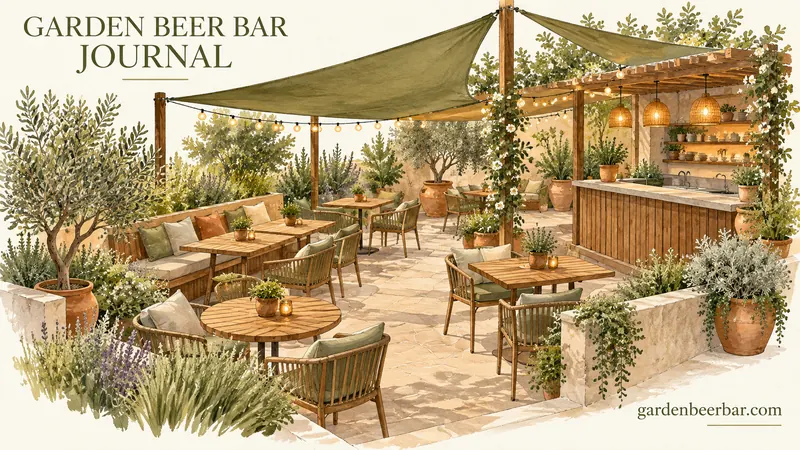
Original hospitality zoning guidance. Historic Garden Beer Bar operation not asserted; no acoustic performance or countrywide hours promised.
Sources checked 2026-10-10Decide which promise comes first
A guest booking a quiet overnight stay may value different things from a customer choosing an evening terrace. State the accommodation’s environment accurately before the booking. Do not describe a room above the main social area as silent without evidence. A venue can offer sociability and clear expectations, but claims such as soundproof need technical support. This guide concerns the design of a general guesthouse-and-bar concept; it does not assert that the historic Garden Beer Bar guesthouse is currently operating or accepting room bookings.
Separate arrival from the busiest service route
Draw the journey from a vehicle drop-off to reception, stairs or lift and the room. Avoid making guests and luggage squeeze past a food handover or payment queue. If there is a separate entrance, explain it clearly in pre-arrival information and provide an appropriate access procedure. Give arriving guests a place to pause without blocking circulation. The US Access Board’s connected-route guidance offers useful design examples, while local accessibility and building requirements need their own professional review.
Map noise sources rather than buying decoration
Observe conversations, music, chairs moving, kitchen extract, refrigeration, doors and bottle or waste handling. Listen from the rooms during a representative busy period, not only an empty afternoon. WHO guidance identifies noise-related sleep disturbance, which is why room comfort deserves serious attention. An acoustic professional can assess the actual building and recommend appropriate measures. Plants or a decorative screen may improve the appearance without providing meaningful sound isolation. Do not promise a decibel reduction from an untested curtain or panel.
Design the operating routine alongside the rooms
Consider locating quieter activities near bedrooms and keeping service movements away from room doors where the building allows it. Schedule waste handling, furniture movement and deliveries to reduce avoidable disturbance, within local requirements. Give staff a written closing routine and a person responsible for responding to guest complaints. Local permitted hours and noise rules must be checked for the property; there is no single timetable for all Thailand or Cambodia. A building layout alone cannot compensate for uncontrolled late service.
Keep accommodation and dining records clear
If guests can charge meals to a room, define authorisation, guest identification, itemised records and settlement. Avoid a shared informal tab that anyone can amend without accountability. A room reservation should make clear whether breakfast, terrace access or any meal package is included. Keep room and group-event cancellation conditions distinguishable. Give visitors a contact method for arrival problems without publishing staff members’ private details unnecessarily. The aim is a handover that works when different staff cover reception and the terrace.
Measure comfort as well as occupancy
Track recurring complaints by room, time and source, while avoiding unnecessary personal details in the log. Distinguish an isolated incident from a room that repeatedly disappoints guests. Before purchasing new equipment, ask whether it could add vibration, heat or service traffic beside accommodation. Prioritise improvements that solve observed problems, then check the outcome on a comparable evening. Review listings and photographs after changes so booking information matches reality. A smaller, clearly positioned accommodation offer can be more credible than selling every room under the same quiet-stay promise.
Sources and resources
- World Health Organization — environmental noise guidance
- US Access Board — accessible routes; US jurisdiction
Consult the sources for their current information.